NPNorthPath AICanadian context, practical AI work, and steadier career rebuilding.

OpenClaw Playbook

OpenClaw Playbook Two

OpenClaw Playbook Two: Multi-Agent Work Systems for Research, Content, and Marketing

A practical guide to splitting OpenClaw work into clearer roles, handoffs, and review paths instead of one overloaded agent.

Available nowPDF deliveryEnglish + Traditional Chinese
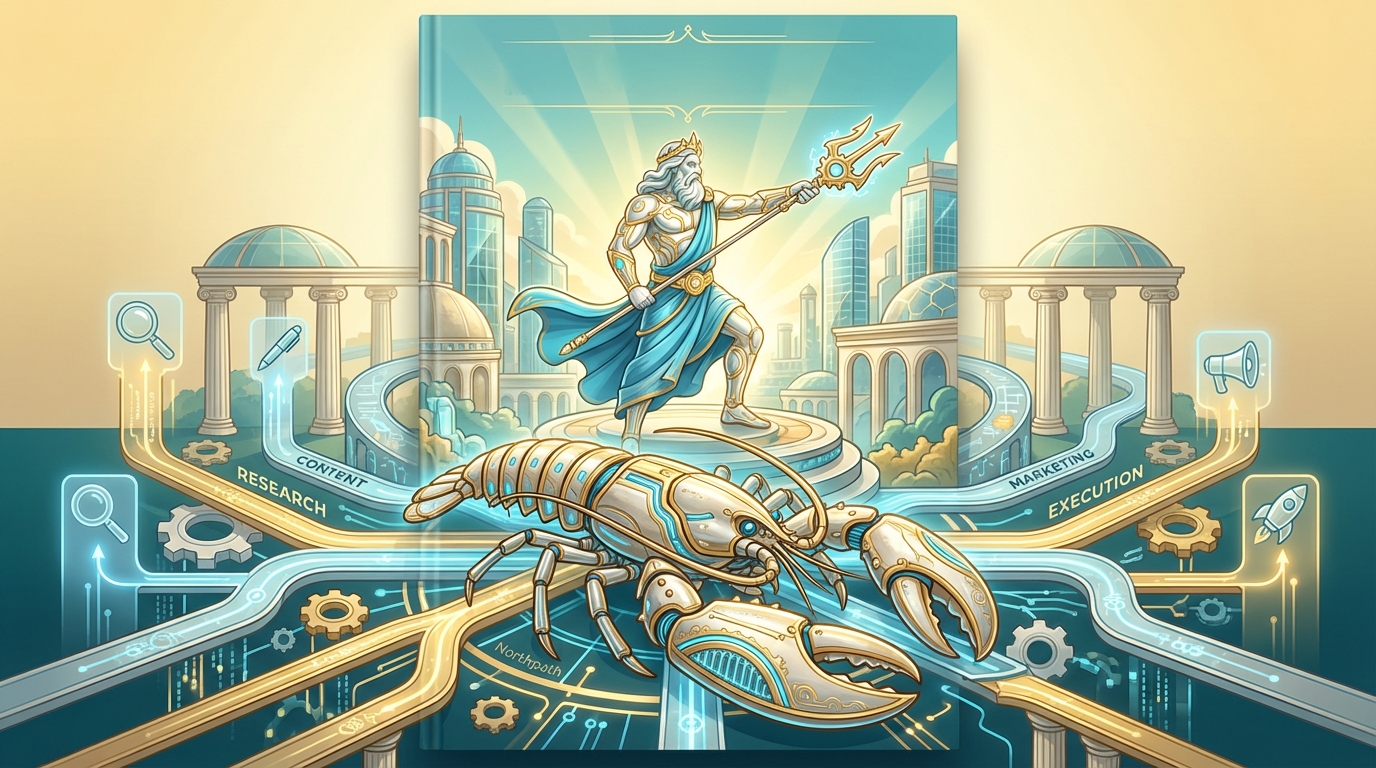
A bright Poseidon-led network scene representing specialized OpenClaw agent lanes for research, content, and marketing.
Product artwork for OpenClaw Playbook Two, focused on multi-agent operating lanes, review structure, and handoff clarity.

Purchase access

CAD 9.80

This playbook shows how to move from one general agent into a more legible multi-agent system. It focuses on role boundaries, handoff contracts, routing logic, and review structure so OpenClaw work becomes easier to inspect, maintain, and trust.

This title is live now with protected bilingual PDF delivery after checkout.

One purchase unlocks both the English and Traditional Chinese editions.

Already bought this title before? Use restore access instead of paying again.

Check saved access

This is a digital product. Once payment is completed and download access has been provided, refunds are not available except in cases of system failure, duplicate charges, or delivery failure.

Keep the email address used during checkout. You can use it later to restore access on any device.

What readers get

Included with one purchase

  • Complete English edition PDF
  • Complete Traditional Chinese edition PDF
  • Multi-agent lane diagrams, role collision matrix, supervisor-router-reviewer map, and handoff contract visual
  • Reusable role cards, reviewer protocols, and handoff contract blocks for OpenClaw adaptation

Why this playbook is different

Readable for you, reusable inside OpenClaw

These OpenClaw titles are written as technical books for the operator and as structured operating assets for the system itself. The chapters explain the logic, and the reusable sections help you turn that logic into prompts, policies, handoff packets, and review rules.

Use it as a serious technical manual

  • Read the book to understand architecture, boundaries, and operating logic.
  • Use the visuals, case pages, and appendices to clarify the next design or operating decision.
  • Keep it as a reference when you need a calmer, more legible system design.

Use it as source material for OpenClaw

  • Extract the relevant role card, packet schema, or approval rule.
  • Adapt it into a system prompt, workspace note, or task packet.
  • Test on a small reversible task before trusting it inside a live workflow.

Available editions

  • English edition: Primary source edition for builders structuring OpenClaw into specialized work lanes.
  • Traditional Chinese edition: Traditional Chinese edition adapted for Taiwan reading habits and technical publishing tone.

Who this is for

The readers this title helps first

  • Builders moving from one general agent into specialized OpenClaw roles
  • Operators who need clearer handoffs between research, drafting, review, and routing
  • Technical consultants designing agent systems for content, operations, or client-facing workflows

What this book helps you do

The decisions and actions this book supports

  • Separate research, drafting, review, and routing into clearer operating lanes
  • Reduce role collision and hidden overlap between agents
  • Design handoff contracts that keep business logic visible and reviewable

How to use it well

Do not dump the whole book into OpenClaw

The strongest results come from selective use. Read the relevant chapter first, extract only the rule or packet you need, then turn that material into a bounded instruction for the current role, lane, or review step.

Recommended sequence

  1. Read the chapter as the human operator.
  2. Extract one usable rule, template, or feed block.
  3. Adapt it to the current workspace and role boundary.
  4. Test it in a reversible task before broader use.

What the book includes

  • A bilingual technical book with visuals, appendices, and case pages.
  • Structured feed-ready material that can strengthen OpenClaw behavior.
  • A reference you can return to when the system starts drifting or getting noisy.

Delivery model

Buy once, then reopen your files when you need them

Complete Stripe Checkout once, then unlock the English and Traditional Chinese editions from the confirmation page. After that, you can reopen the files on the same device or restore access later by email.

How delivery works

  • Open the product page and enter Stripe Checkout.
  • Complete payment and return to the success page with a verified session ID.
  • Unlock one protected download link per available language edition.
  • Return later through saved access or request a restore link by email.

Why access works this way

  • Your purchase stays tied to a verified payment flow.
  • Paid files stay out of public asset paths.
  • Both language editions stay organized under one purchase.

Questions

Product FAQ

Do I need Book One before this title?

Yes. This book assumes you already understand local OpenClaw setup and want to move into clearer multi-agent role design.

Does one purchase include both language editions?

Yes. The English and Traditional Chinese PDF editions are both included.

Is checkout already open for this title?

Yes. The English and Traditional Chinese editions are both connected to live checkout and protected download delivery.

What makes this more than a normal multi-agent ebook?

It does not stop at explanation. It also includes role cards, routing logic, and handoff structures that can be adapted into OpenClaw so the book becomes part study guide and part operating pack.

Use with AI

Use this ebook with an AI assistant you already trust.

NorthPath AI ebooks are written to work well as human reading and as structured reference material. You can read the book yourself, upload the PDF into an assistant you trust, or use both approaches together.

A practical way to use the book

  • Download the PDF after purchase.
  • Upload it into ChatGPT, Gemini, OpenClaw, or another assistant you use regularly.
  • Ask the assistant to study the ebook carefully and use its ideas in future conversations.
  • Return later with questions about summary, decisions, next steps, or practical advice.

See the fuller method

We created a dedicated page showing how to turn a NorthPath ebook into a standing guide inside your AI workflow, with example prompts and practical follow-up uses.

What happens next

This title is live and ready for bilingual PDF delivery through the protected checkout flow.